I still remember the Tuesday evening when I learned how to make chicken broth with bouillon cubes. I’d promised my family homemade soup, chopped all the vegetables, seasoned the chicken—then discovered I had zero broth in the pantry. My heart sank for about three seconds before I spotted those little gold-wrapped cubes tucked behind the spices.
That night changed everything. The soup tasted incredible, my kids asked for seconds, and I realized I’d stumbled onto the ultimate kitchen shortcut. Now I always keep chicken bouillon powder and cubes stocked because they’ve saved countless dinners in my kitchen. Let me show you exactly how this simple trick works.
Jump To
How to Make Chicken Broth with Bouillon Cubes in Minutes
Making broth from bouillon cubes takes less time than boiling pasta. Seriously! You’ll go from zero broth to recipe-ready in about two minutes flat. Plus, this method works whether you need just one cup for a sauce or an entire pot for soup.
Before we dive into the steps, let me clear up the most common question. Yes, bouillon broth absolutely works as a substitute for store-bought or homemade chicken broth in any recipe. In fact, bouillon cubes are chicken broth—they’re just dehydrated and concentrated into a convenient little package. When you dissolve them in water, you’re essentially rehydrating that broth back to its original liquid form.
I’ve tested this method hundreds of times for soups, rice dishes, and sauces on my blog. Consequently, I can promise it works beautifully every single time. If you’ve ever wondered about the differences between chicken bouillon powder and cubes, both work equally well for this technique. Today, though, we’re focusing on the store-bought cubes and granules that most of us already have sitting in our pantries.
What you need to get started
First things first—gather your supplies. You won’t need much, and you probably already own everything:
Bouillon cubes, granules, or paste (chicken flavor, any brand you prefer)
- Standard cubes work perfectly for most recipes
- Granules dissolve faster if you’re in a rush
- Paste gives you the most precise flavor control
Hot or boiling water (measured to match your recipe needs)
- Tap water works fine, but filtered tastes slightly better
- Temperature matters—lukewarm won’t dissolve properly
A heat-safe measuring cup or pot
- Glass measuring cups handle boiling water safely
- Small saucepan works great for larger batches
A spoon or whisk for stirring
- Small whisk breaks up lumps faster
- Regular spoon works just fine too
That’s it! No fancy equipment required whatsoever. I typically use a 4-cup glass measuring cup for most recipes, but sometimes I’ll heat water directly in my soup pot when I’m making a big batch. For health-conscious readers watching sodium intake, I personally love Herb Ox Low Sodium Chicken Bouillon Granules. They dissolve instantly and contain significantly less salt than regular bouillon while still delivering great chicken flavor.
The simple three-step method
Follow these three easy steps, and you’ll have perfect chicken broth ready to use in minutes.
Step 1: Heat Your Water to Boiling
Bring the exact amount of water your recipe needs to a rolling boil on the stovetop. Alternatively, you can heat it in the microwave until it’s steaming hot and bubbling. The temperature really matters here—lukewarm or warm water won’t dissolve the bouillon properly, leaving you with undissolved bits floating around.
Step 2: Add Your Bouillon in the Correct Ratio
For most standard brands like Wyler’s or McCormick, drop in one cube for every cup of water you’ve measured. However, check your specific brand first! Knorr and Maggi cubes are more concentrated, so you’ll only need one cube per two cups of water with those brands. Granules typically follow a one-teaspoon-per-cup ratio across all brands.
Step 3: Stir Continuously Until Completely Dissolved
Use a spoon or small whisk to break up the cube and stir for 30-60 seconds. You want zero lumps remaining—just smooth, flavorful broth that’s ready to use. Granules disappear almost instantly, while cubes take a full minute of stirring. Additionally, paste-style bouillon dissolves fastest of all.
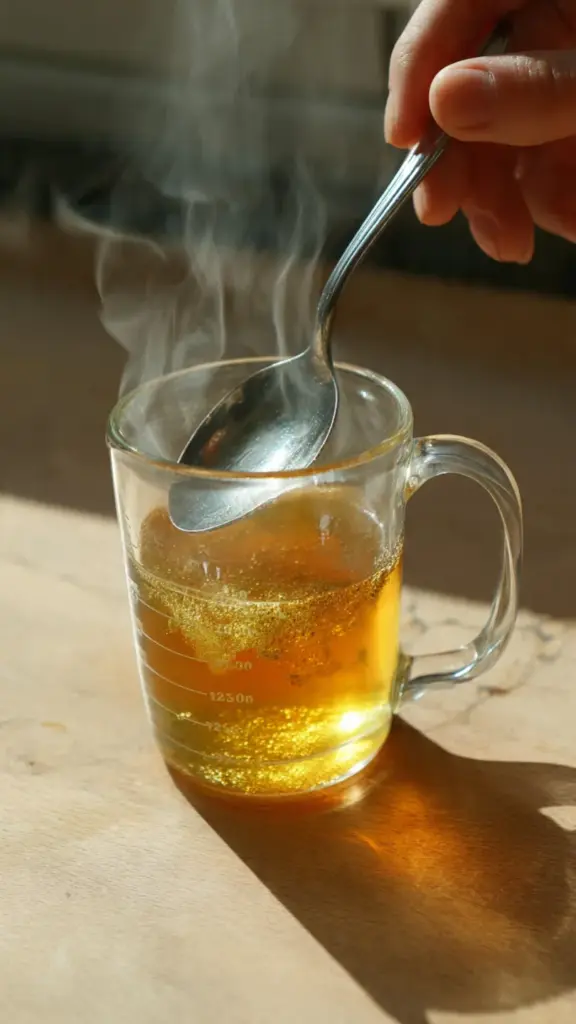
Quick microwave method: Pour water into a microwave-safe measuring cup, heat for 2-3 minutes until boiling, then add your bouillon and stir. This works perfectly when you need just a cup or two for a recipe and don’t want to dirty a pot.
And just like that, you’ve got chicken broth ready for any recipe! Meanwhile, if you’re looking for alternatives when you run out of bouillon completely, check out these chicken bouillon substitutes that work beautifully in a pinch.
Pro tip for storing leftover broth
Once your broth cools to room temperature, transfer it to airtight containers. I use Rubbermaid Brilliance Glass Storage Containers because they’re completely leak-proof and the glass won’t absorb any chicken smell. Your broth will keep in the fridge for 4-5 days or freeze beautifully for up to 3 months.
Bouillon to Water Ratios That Actually Work
Here’s the thing that confused me for years when learning how to make chicken broth with bouillon cubes—not all bouillon cubes are created equal. I used to think one cube always equaled one cup of broth, and I couldn’t figure out why some batches tasted perfect while others came out way too salty or disappointingly weak. Then I finally read the fine print on different brands and discovered the ratios vary significantly.
Understanding how much chicken bouillon per cup of water you actually need changed everything in my kitchen. Now I can nail the perfect broth strength every single time, regardless of which brand I grab from the pantry. Let me break down exactly what works for each type so you can master making chicken broth with bouillon cubes too.
Standard conversions for every brand
The biggest surprise when you’re learning how to make chicken broth with bouillon cubes? Major brands use completely different concentration levels. Here’s what actually works:
| Bouillon Type | Water Amount | Notes |
|---|---|---|
| Standard Cubes (Wyler’s, McCormick, generic) | 1 cube = 1 cup (8 oz) | Most common ratio – what most people expect |
| Knorr Cubes | 1 cube = 2 cups (16 oz) | More concentrated – using 1:1 ratio makes it too salty! |
| Maggi Cubes | 1 cube = 2 cups (16 oz) | Similar concentration to Knorr |
| Granulated Bouillon (any brand) | 1 teaspoon = 1 cup (8 oz) | Universal measurement across brands |
| Better Than Bouillon Paste | 1 teaspoon = 1 cup (8 oz) | Easiest to adjust for custom strength |
| Herb-Ox Granules | 1 teaspoon = 1 cup (8 oz) | Same ratio for regular and low-sodium versions |
This table has saved me from so many cooking disasters! For instance, I once made rice using Knorr cubes at a 1:1 ratio, and it came out inedibly salty. Now I always double-check how much chicken bouillon per cup of water the package recommends before I start cooking.
Dissolving Speed Comparison
- Paste (Fastest): Dissolves almost instantly in hot water, taking maybe 10 seconds of stirring
- Granules (Fast): Come next at 20-30 seconds to fully dissolve
- Cubes (Slowest): Need the full minute because they’re compressed solid blocks
Why the concentration differences matter: Knorr and Maggi pack more flavor compounds into each cube, which means you need less product overall. Therefore, a 24-cube box of Knorr actually makes 48 cups of broth instead of 24. That’s double the value! On the other hand, you can’t just substitute them one-for-one in recipes without adjusting the water when you’re making bouillon for broth.
If you’re interested in making your own bouillon from scratch, you might enjoy learning about beef bouillon powder too—the same principles for how to make chicken broth with bouillon cubes apply across all bouillon types.
How to make 2 cups or 4 cups of broth
Most recipes call for specific amounts like 2 cups or 4 cups rather than odd measurements. Consequently, here’s your quick-reference guide for the most common amounts when making bouillon for broth:
For 2 cups (16 oz) of chicken broth:
- Standard cubes: 2 cubes
- Knorr/Maggi cubes: 1 cube
- Granules or paste: 2 teaspoons
For 4 cups (32 oz / 1 quart) of chicken broth:
- Standard cubes: 4 cubes
- Knorr/Maggi cubes: 2 cubes
- Granules or paste: 4 teaspoons
For 6 cups (48 oz) of chicken broth:
- Standard cubes: 6 cubes
- Knorr/Maggi cubes: 3 cubes
- Granules or paste: 6 teaspoons (2 tablespoons)
For 8 cups (64 oz / 2 quarts) of chicken broth:
- Standard cubes: 8 cubes
- Knorr/Maggi cubes: 4 cubes
- Granules or paste: 8 teaspoons (2 tablespoons + 2 teaspoons)
Adjusting strength to your preference: Not everyone likes the same intensity when they make chicken broth with bouillon cubes. Therefore, I adjust how much chicken bouillon per cup of water based on how I’m using the broth:
For stronger, more concentrated broth (soups, sipping broth, or intense chicken flavor):
- Add 25% more bouillon than the standard ratio
- Example: Use 1.25 teaspoons per cup instead of 1 teaspoon
- Works beautifully for chicken pot pie filling where you want bold flavor
For lighter, more delicate broth (cooking rice, steaming vegetables, or subtle background flavor):
- Reduce bouillon by 25-30%
- Example: Use 0.75 teaspoon per cup instead of 1 teaspoon
- Perfect when you want just a hint of chicken flavor
For low-sodium cooking:
- Use the light broth ratio above (less bouillon = less salt)
- Or switch to low-sodium granules like Herb Ox Low Sodium Chicken Bouillon
- You can always add regular salt separately to control exactly how much you’re consuming
My Personal Trick
I keep both regular and low-sodium bouillon cubes for chicken broth in my pantry. Then I mix them 50/50 when I want medium sodium levels. This gives me better flavor than low-sodium alone but cuts the salt considerably compared to regular bouillon.
Remember
these ratios for how to make chicken broth with bouillon cubes serve as your starting point. After you make chicken broth a few times, you’ll develop your own preferences. Some people love intensely flavored broth, while others prefer something more subtle. There’s no wrong answer—just what tastes right to you!
Tips for Better-Tasting Bouillon Broth
Store-bought bouillon already tastes good straight from the package, but I’ve discovered a few simple tricks that transform it from “good enough” to “did you really make chicken broth with bouillon cubes?” My friends always ask for my secret when I serve soup made with bouillon, and honestly, it’s not complicated at all. These small additions make a massive difference in the final flavor when you’re learning how to make chicken broth with bouillon cubes.
The best part? You probably already have everything you need sitting in your kitchen right now. Let me show you exactly what works to take your bouillon for broth to the next level.
Simple flavor boosters that work
Add fresh aromatics while the broth simmers. This single step changes everything when you make chicken broth with bouillon cubes. After dissolving your bouillon cubes for chicken broth in hot water, toss in a smashed garlic clove, a quarter of an onion, or a bay leaf. Then let everything simmer together for just 5 minutes. The aromatics infuse the broth with depth and complexity that makes it taste homemade rather than something made from cubes.
My go-to combination when making how to make chicken broth with bouillon cubes includes:
- 1 smashed garlic clove (don’t even bother peeling it)
- 1/4 small onion, skin left on (the skin adds beautiful color)
- 1 bay leaf
- A few black peppercorns
- Fresh thyme sprigs if I have them
Simply strain out the solids before using your broth in recipes. This technique works beautifully whether you’re making 2 cups or 8 cups of bouillon for broth.
Simmer, don’t just stir and use. Most people dissolve their bouillon cubes for chicken broth in hot water, stir, and immediately use it. However, if you’ve got an extra 5 minutes, let that broth simmer gently on the stove. The heat brings all the flavors together and mellows any harsh salty notes. Additionally, the simmering evaporates a tiny bit of water, which concentrates the flavor slightly. This works whether you’re using cubes, granules, or paste to make chicken broth with bouillon.
Add a splash of acid at the end. This trick sounds weird, but it absolutely works when making bouillon for broth. Right before you use your broth, squeeze in a bit of fresh lemon juice—about 1 teaspoon per 4 cups of broth. The acid brightens all the flavors and makes the broth taste fresher and more vibrant. Alternatively, you can use a small splash of apple cider vinegar if you don’t have lemons.
Try these additional flavor boosters:
Quick Flavor Enhancers
- Fresh herbs: Parsley, thyme, or rosemary added during the last 2 minutes of simmering
- Ginger: A thin slice adds warmth and complexity, especially for Asian-inspired dishes
- Tomato paste: Half a teaspoon stirred in creates richer, deeper color and umami
- Soy sauce: Just a dash (1/4 teaspoon) adds savory depth without making it taste Asian
These additions work particularly well when you’re using broth for chicken and rice dishes or hearty soups where the broth plays a starring role.
Reducing sodium without sacrificing taste
Let’s talk about the elephant in the room—regular bouillon contains a lot of sodium. One cube typically packs 800-900mg of sodium, which can add up quickly when you’re watching your salt intake and trying to figure out how much chicken bouillon per cup of water to use. Fortunately, you’ve got several options for managing this when you make chicken broth with bouillon cubes.
Switch to low-sodium bouillon products. The easiest solution when learning how to make chicken broth with bouillon cubes on a low-sodium diet? Buy low-sodium versions from the start. Herb Ox Low Sodium Chicken Bouillon Granules contain about 25% less sodium than regular versions while maintaining excellent chicken flavor. Better Than Bouillon also makes a reduced-sodium version that cuts salt by nearly half, making it perfect for anyone concerned about how much chicken bouillon per cup of water they should use.
Use the dilution method for regular bouillon. If you only have regular bouillon cubes for chicken broth on hand, simply use less than the package recommends when figuring out how much chicken bouillon per cup of water. For example, use 3/4 teaspoon per cup instead of a full teaspoon. Then compensate for the lighter flavor with the aromatics I mentioned above—garlic, onion, and herbs add tons of flavor without adding any sodium.
Build flavor with sodium-free ingredients:
- Mushrooms (dried shiitake work amazingly well in bouillon for broth)
- Nutritional yeast (adds savory umami depth)
- Fresh vegetables simmered in the broth
- Herbs and spices (paprika, turmeric, dried thyme)
Make a 50/50 blend. Mix low-sodium and regular bouillon cubes for chicken broth together. This cuts your sodium roughly in half while keeping better flavor than low-sodium alone. I do this constantly in my kitchen, especially when cooking for family members watching their salt intake but still wanting to make chicken broth with bouillon cubes that tastes great.
Don’t add extra salt to your recipes. When you make chicken broth with bouillon cubes, remember the broth already contains plenty of salt. Therefore, skip adding salt to your soup, rice, or sauce until the very end. Taste first, then adjust if needed. You’ll often find you don’t need any additional salt at all.
If you’re making homemade stock from scratch (like for special occasions), an OXO Fat Separator helps remove excess fat and creates cleaner, lighter broth. While bouillon for broth doesn’t have this fat issue, the tool comes in handy when you graduate to making bone broth.
Here’s something interesting I’ve learned: your taste buds adjust to lower sodium over time. When you first switch to reduced-sodium versions when you make chicken broth with bouillon, it might taste a bit bland. However, stick with it for two weeks, and regular bouillon will start tasting too salty. Your palate genuinely adapts!
Remember
the goal isn’t to eliminate all sodium—your body needs some salt. Instead, you’re simply being mindful about how much chicken bouillon per cup of water you’re using, especially since most of us get plenty of sodium from other sources throughout the day.
The Complete Chicken Broth Recipe (Using Bouillon Cubes)
Now let’s put everything together into one simple recipe you can follow every single time. I’ve tested this method dozens of times in my own kitchen, and it works perfectly whether you need a quick cup for gravy or a full pot for soup. This is my go-to method whenever I need to make chicken broth with bouillon cubes in a hurry.
The beauty of this recipe? It’s ready in just 5 minutes from start to finish. No simmering bones for hours, no skimming foam, no complicated steps. Just hot water, bouillon cubes for chicken broth, and a few optional aromatics if you want extra flavor.
How to Make Chicken Broth with Bouillon Cubes

Equipment
- Medium saucepan or microwave-safe container
- Measuring cup
- Whisk or spoon
- Fine-mesh strainer (if using aromatics)
Ingredients
For Basic Chicken Broth
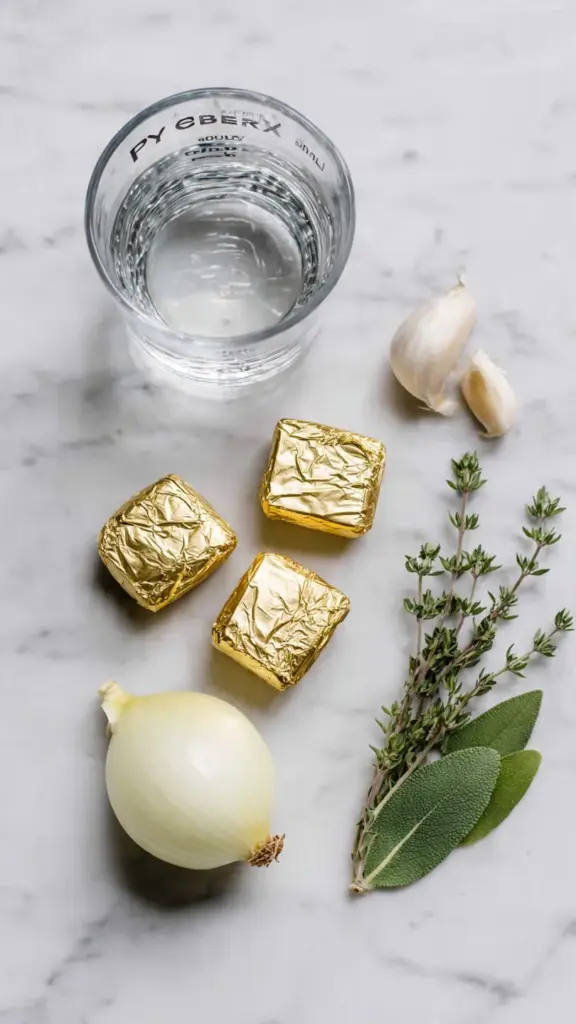
- 4 cups water 32 oz, must be boiling hot
- 4 chicken bouillon cubes standard brands like Wyler’s or McCormick, OR 2 Knorr/Maggi cubes, OR 4 teaspoons bouillon granules
- 1 pinch black pepper optional
For Enhanced Flavor (Optional)
- 1 garlic clove smashed, unpeeled
- 1/4 small onion unpeeled, quartered
- 1 bay leaf
- 2-3 sprigs fresh thyme or parsley
- 1/2 teaspoon fresh lemon juice
Instructions
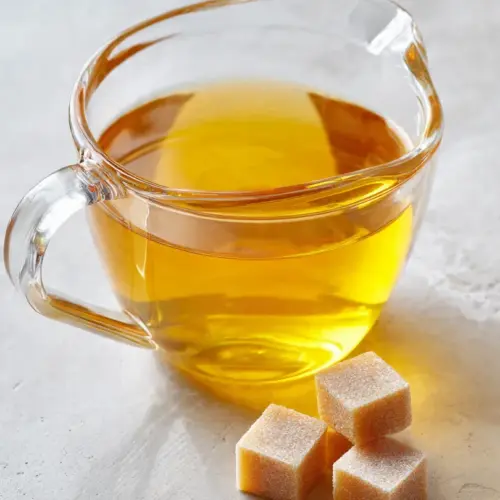
- Bring 4 cups of water to a rolling boil in a medium saucepan on the stovetop. Alternatively, heat water in a large microwave-safe measuring cup for 3-4 minutes until steaming hot and bubbling. The water must be very hot for the bouillon cubes to dissolve properly.
- Add your bouillon cubes (or granules) to the boiling water. For standard brands like Wyler’s or McCormick, use 4 cubes. For Knorr or Maggi brands, use only 2 cubes since they’re more concentrated. If using granules, measure 4 teaspoons.
- Stir vigorously with a whisk or spoon for 30-60 seconds until the bouillon completely dissolves. You shouldn’t see any solid pieces remaining. Granules dissolve fastest (about 20 seconds), while cubes take the full minute.
- For enhanced flavor (optional): Add the smashed garlic clove, quartered onion, bay leaf, and fresh herbs to the dissolved broth. Let simmer gently for 5 minutes to infuse the aromatics into the broth.
- Strain out the aromatics using a fine-mesh strainer if you added them. Stir in the fresh lemon juice for brightness. Your chicken broth is now ready to use in any recipe!
- To store: Let the broth cool to room temperature, then transfer to airtight containers. Refrigerate for up to 5 days or freeze for up to 3 months.
Notes
Storing and Using Your Homemade Broth
Making chicken broth with bouillon cubes is so quick that you might wonder why bother storing it. However, I’ve found that preparing a larger batch saves time during busy weeknights. Plus, having bouillon for broth ready to grab means you’re always prepared.
Storage guidelines and shelf life
Refrigerator storage
Let your chicken broth made from bouillon cubes cool completely before refrigerating (about 30 minutes). Never seal hot broth—the steam promotes bacterial growth. Store in airtight containers like Rubbermaid Brilliance Glass Containers for 4-5 days maximum.
Freezer storage: Frozen bouillon for broth lasts 3 months without losing flavor. I freeze in multiple sizes—1-cup, 2-cup, and 4-cup portions—so I always have the right amount ready.
Freezing Tips
- Ice cube method: Freeze broth in ice cube trays, then store cubes in freezer bags. Each cube equals 2 tablespoons—perfect for deglazing pans.
- Leave headspace: Fill containers only 3/4 full since liquids expand when frozen.
- Date everything: Use permanent marker to label containers with the date you made the broth.
- Quick thaw: Thaw overnight in fridge, or drop frozen blocks directly into hot soup as it cooks.
Best uses for bouillon broth
Now that you know how to make chicken broth with bouillon cubes, here’s how to use it:
Delicious Ways to Use Your Broth
- Soups and stews: Forms the flavorful foundation—use for chicken noodle, potato soup, or any hearty stew.
- Cooking rice and grains: Replace water with chicken broth made from bouillon cubes for instant flavor. Works for quinoa, couscous, and farro too.
- Deglazing pans: Pour hot broth into your pan after searing meat, scrape up browned bits for instant pan sauce.
- Braising vegetables: Simmer carrots, celery, or green beans in broth instead of water for incredible flavor.
- Mashed potatoes: Replace milk with chicken broth for savory, fluffy potatoes.
- Gravy base: Use as your liquid foundation for smooth, flavorful gravy.
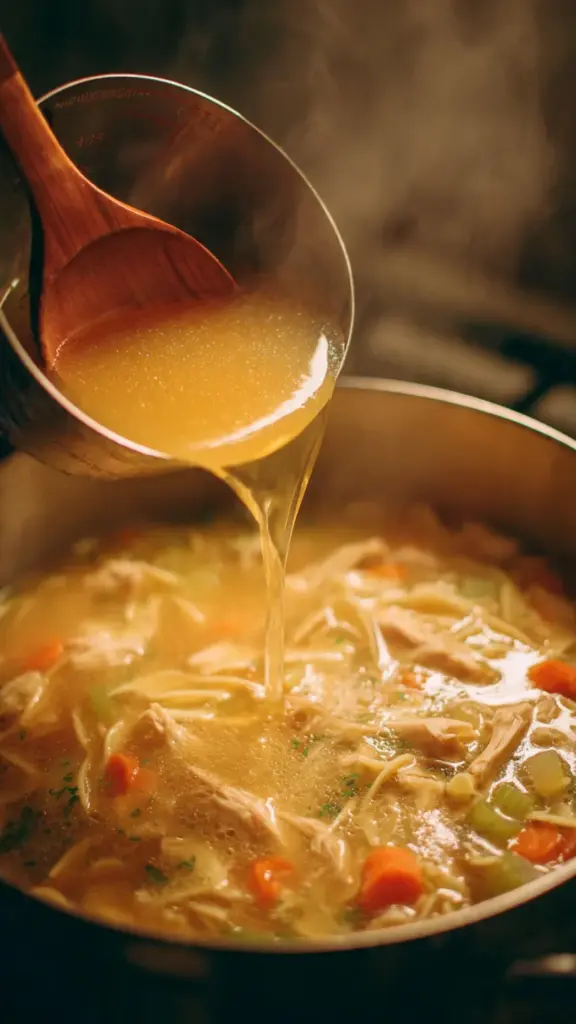
The beauty of knowing how to make chicken broth with bouillon cubes is you never run to the store when recipes need broth. Whether making chicken and rice casseroles or braised beef dishes, this technique has you covered.
Troubleshooting Common Bouillon Broth Problems
Even though learning how to make chicken broth with bouillon cubes is simple, sometimes things don’t turn out quite right. Here are quick fixes for the most common issues I’ve encountered.
My broth tastes too salty
This happens when you use too much bouillon or a brand that’s extra concentrated. Fix it by diluting with plain water—add 1/4 to 1/2 cup at a time and taste until it’s right. Next time, use slightly less bouillon or switch to low-sodium bouillon cubes for chicken broth. You can also add a peeled potato to the broth and simmer for 10 minutes—it absorbs excess salt like magic.
The bouillon cube won’t dissolve completely
The water isn’t hot enough. Bouillon needs boiling or near-boiling water to dissolve properly. Reheat your water to a full boil, then add the cube and stir vigorously. Breaking the cube into smaller pieces before adding also helps it dissolve faster.
My broth tastes weak or bland
You either used too much water or your bouillon is old and has lost potency. Add another half cube (or half teaspoon of granules) and taste again. Alternatively, boost flavor by simmering the broth with garlic, onion, or fresh herbs for 5 minutes. A squeeze of lemon juice at the end also brightens the flavor considerably.
The broth looks cloudy
This is completely normal and nothing to worry about! Bouillon broth naturally looks slightly cloudy compared to clear homemade stock. It doesn’t affect taste or safety at all. If clarity matters for presentation, you can strain the broth through a coffee filter, though I rarely bother.
It smells or tastes “off”
Check the expiration date on your bouillon package. Old bouillon loses flavor and can develop stale, musty tastes. Also make sure stored broth hasn’t gone bad—refrigerated bouillon for broth only lasts 4-5 days. When in doubt, throw it out and make a fresh batch.
FAQs
Can you use bouillon cubes to make chicken broth?
Yes, absolutely! Bouillon cubes are dehydrated, concentrated chicken broth in solid form. When you dissolve them in hot water, you’re rehydrating that broth back to liquid form. This is one of the quickest ways to make chicken broth with bouillon cubes—it takes just 2-3 minutes compared to hours of simmering bones. The broth works perfectly as a 1:1 substitute for store-bought or homemade chicken broth in any recipe, from soups to rice dishes to gravies.
What is the ratio of bouillon to water for broth?
The standard ratio is 1 bouillon cube per 1 cup (8 oz) of water for most brands like Wyler’s and McCormick. However, Knorr and Maggi cubes are more concentrated, so you only need 1 cube per 2 cups of water with those brands. For granulated bouillon or paste (like Better Than Bouillon), use 1 teaspoon per 1 cup of water across all brands. Always check your package directions since how much chicken bouillon per cup of water varies by brand concentration.
How many bouillon cubes for 4 cups of broth?
For most standard brands (Wyler’s, McCormick, generic), dissolve 4 bouillon cubes in 4 cups of boiling water. For Knorr or Maggi brands, you’ll only need 2 cubes for 4 cups since they’re twice as concentrated. If using granulated bouillon, measure 4 teaspoons (which equals about 1 tablespoon plus 1 teaspoon). Stir until completely dissolved, and your chicken broth made from bouillon cubes is ready to use immediately.
How to convert chicken bouillon to chicken broth?
Converting chicken bouillon to broth is simple: boil the amount of water your recipe needs, add 1 bouillon cube per cup of water (or check your brand’s specific ratio), then stir until completely dissolved. For example, if a recipe calls for 3 cups of chicken broth, boil 3 cups of water and dissolve 3 standard bouillon cubes (or 1.5 Knorr cubes). Use this bouillon for broth as a perfect 1:1 replacement in any recipe. The conversion takes just 2-3 minutes total.
More Recipes You May Like
If you enjoyed learning how to make chicken broth with bouillon cubes, you’ll love these other recipes where homemade broth really shines. Find more dinner inspiration on my Pinterest.
Comforting Chicken Dishes
Essential Kitchen Guides